The Science of Sleep: Why REM Cycles Matter More Than You Realize
Sleep is often treated like spare time — something we fit in after work, screens, and responsibilities. But biologically, sleep is not downtime. It is one of the most active and restorative processes in the human body. It regulates emotional stability, memory, metabolism, immune defence, and even long-term disease risk. When sleep is compromised, these systems begin to weaken — sometimes quietly, but consistently.
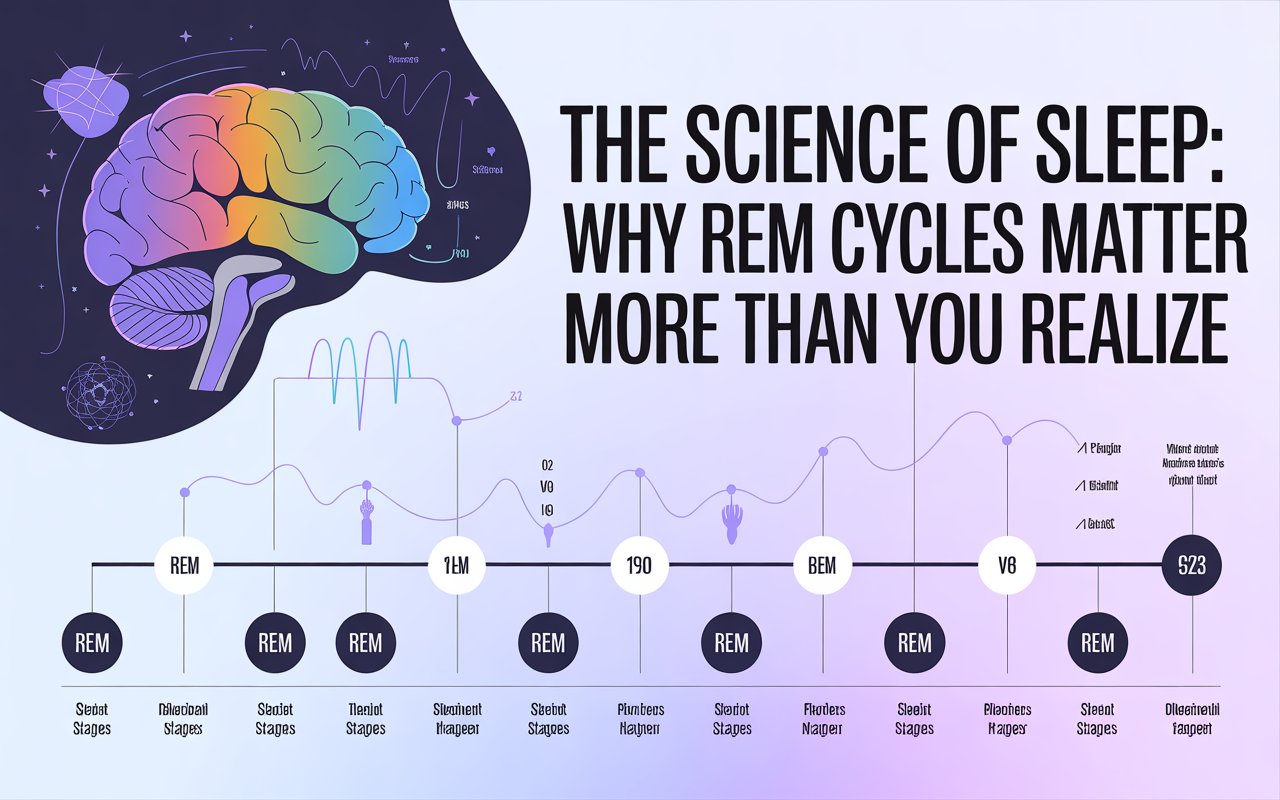
To understand why sleep matters so much, we need to look at how it is structured. Sleep does not happen in one continuous state. Instead, it moves through repeating cycles of Non-REM (NREM) sleep and Rapid Eye Movement (REM) sleep, each cycle lasting about 90 minutes. Most adults complete four to six of these cycles per night, depending on how long they sleep.
The early part of the night is dominated by deeper stages of NREM sleep, particularly slow-wave sleep. This is when the body carries out physical repair. Growth hormone is released, immune processes strengthen, tissues recover, and energy stores are restored. It is the body’s maintenance window.
As the night progresses, REM sleep becomes more prominent. REM is the stage most associated with vivid dreaming, but its function goes far beyond dreams. During REM, the brain becomes highly active while the body remains temporarily immobilized. This stage plays a critical role in consolidating memories, integrating learning, and processing emotional experiences. Research led by sleep scientist Matthew Walker at the University of California, Berkeley has shown that REM sleep helps recalibrate emotional circuits in the brain, reducing next-day stress reactivity. Other studies published in journals such as Nature Reviews Neuroscience and Sleep support the idea that REM contributes to creative thinking, problem-solving, and emotional regulation.
One important detail is that REM periods grow longer toward the morning. This means the final one or two sleep cycles contain the highest proportion of REM sleep. When someone consistently wakes up too early or restricts their sleep to five or six hours, these REM-rich cycles are often the first to be lost. Over time, REM deprivation has been linked to mood instability, impaired concentration, and heightened anxiety sensitivity.
There is a common belief that sleep must occur specifically between 11:00 PM and 6:00 AM to be effective. Scientifically, there is no universal “magic window” required for REM completion. What matters more is alignment with the body’s circadian rhythm — the internal biological clock regulated by light exposure and melatonin secretion. Under natural conditions, melatonin levels typically begin rising between 9:00 PM and 11:00 PM. Organizations such as the National Sleep Foundation and the American Academy of Sleep Medicine recommend that adults aim for 7–9 hours of consistent sleep to ensure full cycling through both deep and REM stages.
Circadian rhythm research, recognized by the Nobel Prize in Physiology or Medicine in 2017 for discoveries in molecular clock mechanisms, reinforces the importance of sleeping in sync with biological timing rather than arbitrary clock rules. For most adults living in daylight-based schedules, sleeping roughly between 10:30–11:30 PM and 6:00–7:30 AM aligns naturally with hormonal patterns. However, consistency remains more important than a fixed bedtime. Irregular sleep schedules can fragment REM and reduce overall sleep efficiency.
Lifestyle factors also influence REM quality. Alcohol, late-night screen exposure, and inconsistent sleep timing can suppress or fragment REM sleep, even if total sleep duration appears adequate. Chronic restriction below six hours per night has been associated with impaired glucose regulation, increased inflammation, and elevated long-term cardiometabolic risk in large epidemiological studies published in journals such as The Lancet and Sleep Medicine Reviews.
In practical terms, aiming for about 7.5 to 8 hours of sleep allows most individuals to complete five full 90-minute cycles. This protects both early-night deep sleep and late-morning REM phases. Protecting those final cycles is particularly important for cognitive clarity and emotional resilience.
Sleep is not a luxury. It is a biological requirement woven into nearly every system in the body. When we protect our sleep cycles — especially REM — we support mental sharpness, emotional balance, immune strength, and long-term health. In preventive healthcare, few interventions are as powerful, accessible, and cost-effective as consistent, high-quality sleep.
The Power of Good Sleep: Benefits, Trade-offs, and Why It Completes the Work You Start During the Day
Sleep is often underestimated because it looks passive. You lie down, close your eyes, and appear to be doing nothing. In reality, some of the most important biological work of the day happens while you are asleep. Exercise, studying, emotional stress, even dieting — none of these processes are completed when you finish the activity. They are completed during sleep.
Understanding the real pros and cons of sleep helps shift the mindset from “I’ll sleep if I have time” to “Sleep is part of the work.”
The Benefits of Good Sleep
One of the strongest advantages of healthy sleep is its effect on learning and memory. When you study, practice a skill, or learn new information, your brain does not immediately lock it in. During REM and deep sleep, neural pathways are strengthened and stabilized. Research from institutions such as Harvard Medical School has shown that sleep improves memory consolidation and enhances skill retention. REM sleep supports creative problem-solving and integration of complex information. This is why students who sleep after studying perform better than those who stay up all night.
Sleep also plays a decisive role in emotional regulation. Studies led by Matthew Walker at the University of California, Berkeley demonstrate that REM sleep helps recalibrate emotional circuits in the brain. Without sufficient REM sleep, the amygdala — the brain’s threat-detection center — becomes more reactive, leading to heightened stress and mood instability. In simple terms, sleep makes you more emotionally steady.
Muscle recovery is another major benefit. Many people believe muscle growth happens in the gym. It does not. Training creates microscopic muscle damage. Repair and adaptation occur later, primarily during deep sleep when growth hormone is released. The American Academy of Sleep Medicine highlights how slow-wave sleep supports physical restoration and tissue repair. If sleep is restricted, recovery slows, soreness increases, and strength gains plateau — even if workouts are intense and consistent.
Metabolism and calorie expenditure are also connected to sleep. While sleeping, the body continues to burn calories to maintain core temperature, brain activity, breathing, and cellular repair. In fact, a significant portion of daily energy expenditure occurs during sleep as part of basal metabolic rate (BMR). More importantly, sleep regulates hormones that control appetite and fat storage. Inadequate sleep disrupts leptin and ghrelin levels, increasing hunger and cravings. Large-scale studies published in journals such as The Lancet have linked chronic short sleep duration with higher risk of obesity and metabolic dysfunction.
Good sleep strengthens immune function as well. During deep sleep, immune cells communicate more efficiently, inflammatory processes are regulated, and the body enhances its defense mechanisms. Consistent sleep has been associated with reduced susceptibility to infections and improved vaccine responses.
Cognitively, adequate sleep improves reaction time, attention span, and decision-making. It sharpens executive function — the ability to plan, focus, and regulate impulses. In professional and academic settings, this translates into better performance with less mental strain.
Are There Any Downsides to “Too Much” Sleep?
While sufficient sleep is protective, excessive sleep — typically more than nine or ten hours consistently — can sometimes indicate underlying issues such as poor sleep quality, depression, or medical conditions. Oversleeping does not necessarily mean better recovery. In some cases, it reflects fragmented or inefficient sleep.
Another practical downside is that prioritizing sleep may require trade-offs. It may mean limiting late-night screen time, social media scrolling, or irregular schedules. For many, this adjustment feels restrictive at first. However, the long-term gains in energy, mood, and productivity typically outweigh the short-term inconvenience.
It is also important to recognize that sleep alone cannot compensate for poor lifestyle habits. It supports exercise and nutrition, but it does not replace them. Optimal health requires alignment across movement, diet, stress management, and sleep.
The Critical Insight: Sleep Completes the Cycle
If you train at the gym but do not sleep well, muscle repair is incomplete.
If you study intensely but cut your sleep short, memory consolidation is weakened.
If you diet but sleep poorly, appetite hormones become dysregulated.
Sleep is not separate from these efforts — it finalizes them.
The National Sleep Foundation recommends that most adults aim for 7–9 hours of consistent nightly sleep. This typically allows for four to six full sleep cycles, preserving both deep sleep for physical repair and REM sleep for cognitive and emotional integration.
In preventive healthcare, sleep is one of the most cost-effective and biologically powerful tools available. It enhances learning, accelerates muscle recovery, stabilizes mood, supports metabolic balance, and strengthens immunity. The real question is not whether you can afford to sleep more, it is whether you can afford not to.
Conclusion: Sleep Is Not Rest — It Is Restoration
Sleep is not an optional recovery tool. It is the biological foundation that allows every other effort — physical training, studying, emotional regulation, metabolic health — to actually work.
Across the night, the body cycles through structured stages of non-REM and REM sleep. Early cycles prioritize deep sleep, where physical repair, immune strengthening, and growth hormone release occur. Later cycles are richer in REM sleep, which supports memory consolidation, emotional processing, creativity, and cognitive integration. Cutting sleep short, especially in the early morning hours, disproportionately reduces REM sleep and weakens these critical functions.
There is no rigid universal clock time that guarantees “perfect” sleep. What matters most is consistency, alignment with your circadian rhythm, and completing enough full cycles — typically achieved with 7–9 hours of sleep for most adults. Regular sleep timing, reduced late-night light exposure, and protecting those final REM-rich cycles significantly improve overall sleep quality.
Good sleep strengthens learning and memory retention, enhances muscle recovery, regulates appetite hormones, supports calorie expenditure through basal metabolism, stabilizes mood, and improves immune resilience. In contrast, chronic sleep restriction increases stress reactivity, impairs cognitive performance, disrupts metabolic balance, and elevates long-term disease risk.
In preventive healthcare, sleep is one of the most powerful, accessible, and evidence-backed interventions available. It costs nothing yet influences nearly every system in the body.
1. Exercise challenges the body.
2. Learning challenges the brain.
3. Stress challenges the nervous system.
Sleep is what allows all three to adapt, recover, and grow stronger.
Protecting your sleep is not a luxury. It is a strategic health decision.