Vitamin D and its role in Immunity, Respiratory Health and Mental Health
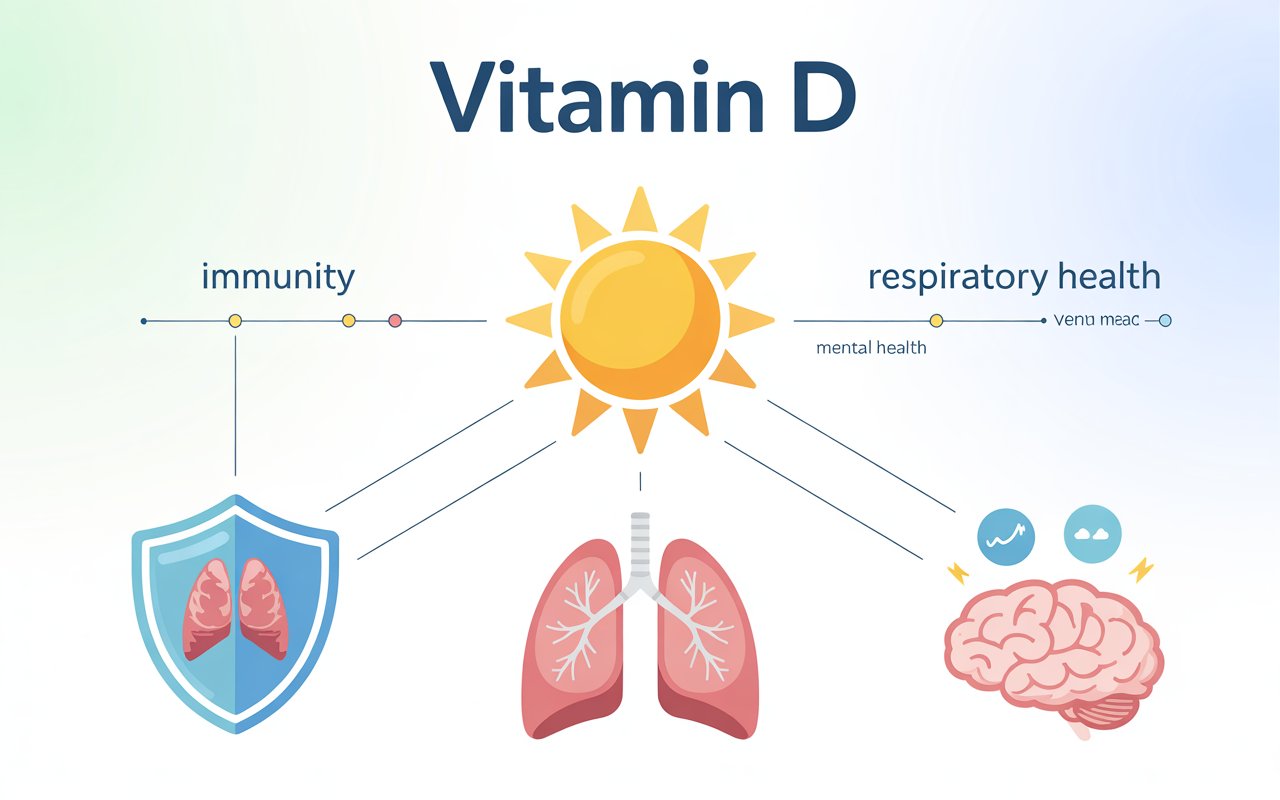
Vitamin D is both a nutrient we eat and a hormone our bodies make. It is a fat-soluble vitamin that has long been known to help the body absorb and retain calcium and phosphorus; both are critical for building bone. Also, recent studies show that Vitamin D can help in modulating immune functions, helps in various mental disorders such as depression, anxiety, cognitive impairment, autism, etc and in reducing the risk of infection and death from Acute Respiratory Tract Infections (ARTIs), including those from influenza, CoV, and pneumonia.
Many of the body’s organs and tissues have receptors for Vitamin D, which suggest important roles beyond bone health also the role of Vitamin D in disease prevention is an important area of research. Given the current pandemic our immunity, respiratory health and mental health are what everybody is talking about. Let’s see how Vitamin D helps in keeping ourself healthy through this pandemic.
Role of Vitamin D in Immunity and Current Pandemic
Several studies suggest that Vitamin D deficiency is a potential risk factor for various diseases, including systemic infections and autoimmune diseases. Vitamin D plays a vital role in mediating innate immune responses. At early stages of COVID-19, protective immune response is responsible for eliminating the virus. Thus, potential immunomodulators, like Vitamin D, could be of great importance. Vitamin D levels ≥ 95 nmol/L are associated with a 2-fold lower risk of acute viral respiratory infections Vs. levels < 95 nmol/L. Vitamin D has direct effects on immune cell proliferation and activity. (Source: Ebadi M et al. Eur J Clin Nutr. 2020;1-4)
Role of Vitamin-D in Respiratory Health
Several available evidences indicate that supplementation with multiple micronutrients with immune-supporting roles may modulate immune function and reduce the risk of infections. A growing number of studies support the role of higher Vitamin D levels in reducing the risk of infection and death from Acute Respiratory Tract Infections (ARTIs), including those from influenza, CoV, and pneumonia.
Vitamin D plays a vital role in modulating the functioning of the immune system by stimulating macrophages (Macrophages are specialised cells involved in the detection, phagocytosis and destruction of bacteria and other harmful organisms) and dendritic cells. It is also suggested that Vitamin D plays an immuno-modulatory role by regulating and suppressing the cytokine inflammatory response that causes the acute respiratory distress syndrome characterizing the severe and often lethal forms of Covid-19.
Role of Vitamin D in Mental Health
Vitamin D may play a vital role in mental health. Several studies have shown the association between Vitamin D deficiency and various psychiatric disorders such as depression, anxiety, cognitive impairment, autism, etc. Vitamin D supplementation may aid in relieving anxiety and depression.
Vitamin D Deficiency
Vitamin D deficiency may occur from a lack in the diet, poor absorption, or having a metabolic need for higher amounts. If one is not eating enough Vitamin D and does not receive enough sun exposure over an extended period, a deficiency may arise. People who cannot tolerate or do not eat milk, eggs, and fish, such as those with lactose intolerance or who follow a vegan diet, are at higher risk for a deficiency.